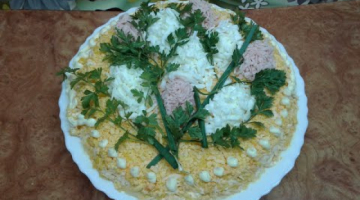
A spring-bright classic for International Women’s Day, Easter, and any “let’s celebrate” table
If there’s a salad that looks like the first sunny day after a long winter, it’s Mimosa. You bring it to the table covered in fluffy, golden yolk crumbs, and people instantly understand what you’re saying without a speech: it’s a holiday, it’s warm in here, and yes-someone cared enough to build layers.
Mimosa salad is simple, but it isn’t lazy. It’s one of those dishes where the ingredients are modest-canned fish, eggs, potatoes, carrots, onion, cheese, mayo-but the result tastes oddly “special,” like it belongs next to crystal glasses and a good playlist.
In the U.S., people often meet Mimosa as a “Russian layered salad.” Some love it immediately. Others need one forkful to understand the logic: salty fish + creamy eggs + sweet carrots + tangy mayo + a little onion bite, all stacked so every layer has a job. And the top? The top is the whole point. That sunny, fluffy “bloom” is why it’s called Mimosa-like the yellow blossoms traditionally gifted for March celebrations.
Below is a full, detailed, very practical guide: how to choose the fish, how to keep layers clean, how to avoid gray-green yolks, how to decorate without stress, and how to make it taste better the next day (because it usually does).
What Is Mimosa Salad?
Mimosa is a layered celebratory salad made with canned fish, boiled vegetables, eggs, mayonnaise, onion, and often cheese. It’s assembled in a dish (or a ring mold), chilled, then topped with a “snowfall” of finely crumbled egg yolk-soft, golden, and almost fluffy.
It’s not a toss-and-serve salad. It’s a build. A little architecture project you can eat.
Why Mimosa Feels Like Spring
Some foods are seasonal even when the ingredients are available year-round. Mimosa is one of them.
It’s light in texture but rich enough to feel festive. It’s soft and gentle-no harsh vinegar punch, no aggressive spice-yet it still has contrast. That’s why it often shows up around early spring holidays: it’s comforting, bright, and oddly optimistic.
And yes, it’s also a nostalgia dish for a lot of people. Even if you didn’t grow up with it, you can feel that it belongs to the category of “family table classics.”
Ingredients for Classic Mimosa Salad (With Cheese)
This is the set you provided, with U.S.-friendly notes and smart options.
Main ingredients
-
Canned fish (1–2 cans, typically 5–7 oz / 140–200 g each)
Classic choices: pink salmon, sardines, saury, mackerel, tuna. -
Carrots – 2 medium
-
Potatoes – 2 medium
-
Marinated onion – from 1 small onion (or half a large)
-
Eggs – 4 for the layers + 2 extra for decoration (optional but pretty)
-
Cheese – 100–150 g (about 3.5–5 oz), finely grated
Mild cheddar, Dutch-style, “Russian”-style, or any firm, not-too-sharp cheese.
For dressing
-
Mayonnaise – enough for thin layers (usually ½ to 1 cup total, depending on dish size)
Use a good-tasting mayo, because it’s basically the glue and the sauce.
For garnish (optional)
-
Fresh herbs (dill, parsley, green onion)
-
Slices of bologna or another mild cooked sausage for “flower” shapes (your original decoration idea)
-
Extra egg whites for decorative texture
Choosing the Fish: This One Detail Changes Everything
Mimosa lives or dies by the fish can you open.
Best options
-
Pink salmon: classic, slightly stronger, very “Mimosa.”
-
Tuna: clean, familiar for Americans, “middle of the road.”
-
Sardines: bold, salty, deep flavor-great if your crowd likes it.
-
Mackerel: rich, savory, very satisfying.
Oil vs water
-
In oil: more flavor, richer mouthfeel.
-
In water: lighter, less dominant.
Either works, but always drain well so your layers don’t slide.
Quick fish prep
-
Drain the can.
-
Flake with a fork.
-
Remove any obvious large bones or skin pieces if you don’t like them.
-
Taste a tiny bit. If it’s very salty, you’ll go lighter on salt in the layers.
Prep Rules That Keep Mimosa Beautiful (Not Mushy)
This salad rewards organization.
The main principle
Everything goes into separate bowls.
Not because it’s fancy-because it prevents “one big mash.”
What to do first
-
Boil potatoes and carrots (whole, skin on).
-
Boil eggs.
-
Cool everything completely.
-
Peel, then grate.
Cold ingredients grate cleaner, stack cleaner, and hold shape.
How to Boil Eggs So the Yolks Stay Bright Yellow
If you’ve ever cut a hard-boiled egg and seen a gray-green ring around the yolk, that’s not “bad eggs.” That’s chemistry from overcooking or slow cooling. It can make the yolk look dull, and for Mimosa we want that sunny color.
A reliable method
-
Put eggs in a pot, cover with cold water by about 1 inch.
-
Bring to a gentle boil.
-
Once boiling, lower heat to a simmer and set a timer:
-
9–10 minutes for firm whites and bright yolks
-
-
Immediately move eggs to an ice bath or very cold water for 5–10 minutes.
That fast cooling stops the reaction that causes the gray-green tint. You’ll get cleaner yolk color and better texture.
How to Marinate Onion (Fast, No Drama)
Onion is important: it brings brightness and a little bite so the salad doesn’t taste flat. But raw onion can be too sharp.
Option A: Quick hot-water method (mildest)
-
Finely dice onion.
-
Pour boiling water over it for 1–2 minutes.
-
Drain very well.
Option B: Classic quick marinade (balanced)
In a small bowl mix:
-
3 tbsp hot water
-
1 tbsp apple cider vinegar (or white vinegar)
-
1 tsp sugar
-
½ tsp salt
Add diced onion, rest 10 minutes, then drain.
You want it flavorful, not swimming.
Grating: The Texture That Makes Mimosa “Mimosa”
Use the small holes on the grater for:
-
potatoes
-
carrots
-
cheese
-
egg whites
-
egg yolks
Fine shreds create that tender, “cloudy” structure. Big chunks make the layers heavy.
Small trick for extra “fluff”
Put cheese in the freezer for 10–15 minutes before grating.
It turns into soft snow instead of sticky clumps.
Classic Mimosa Assembly: 6 Layers + Yolk Finish
You can build Mimosa on:
-
a flat platter (more “home holiday style”)
-
a glass bowl (layers visible, very pretty)
-
a springform ring or salad ring (clean cylinder, restaurant look)
Layer 1: Fish
Spread flaked fish evenly on the bottom.
Press lightly with a fork so it’s flat, not compacted into paste.
Add a thin layer of mayo (or pipe it in lines).
Layer 2: Egg whites
Grate whites, scatter like a soft blanket.
A pinch of salt helps here.
Add mayo in thin stripes.
Layer 3: Carrots
Grated carrots go next-sweet, bright, gentle.
Add mayo lightly.
Layer 4: Onion
Drain onion well, then sprinkle evenly.
This layer is small but powerful. Don’t skip it.
Layer 5: Potatoes
This is usually the thickest layer-the “mattress” that holds everything.
Season lightly with salt and pepper.
Add mayo more generously here than in other layers.
Layer 6: Cheese
Fine-grated cheese, evenly spread.
A little mayo if you want (not mandatory, but it helps the top layer “grab” the yolk).
Finish: Egg yolk “Mimosa bloom”
Grate yolks finely or press through a sieve.
Sprinkle until the salad looks like it’s wearing a yellow sweater.
Now it’s officially Mimosa.
Pressing the Layers: How Much Is Too Much?
You want layers to hold shape, but still feel airy.
-
If you’re using a ring mold, press slightly more firmly.
-
If it’s on a platter, press gently-just enough to level.
Think “light snowpack,” not “construction concrete.”
Chill Time: When Mimosa Becomes Better Than It Was
Mimosa isn’t meant to be eaten immediately. It’s a salad that becomes a unified thing after resting.
Best chill time
-
6–8 hours in the fridge
Overnight is also great.
During this time, mayo softens the layers, flavors mingle, and the texture turns silky instead of separate.
Decoration Ideas (Including Your Sausage-Flower Style)
Decoration is optional, but Mimosa is one of those dishes that invites it.
Minimal classic
-
Just yolk on top
-
Herbs around the edge (dill, parsley, green onion)
“Spring bouquet” version (close to your idea)
-
Grate extra egg whites on a larger grater for contrast.
-
Cut circles from bologna/cooked sausage, then snip edges to make “flowers.”
-
Use green onion as stems.
It’s playful, a bit retro, and honestly perfect for the vibe of Mimosa.
Details that make it look professional
-
Keep yolk crumbs fine and fluffy (sieve = magic).
-
Create contrast: yellow top + green edge + a few orange carrot hints.
-
Don’t overload: Mimosa should still look soft, not crowded.
Why Mimosa Tastes So Satisfying (Even Though It’s Simple)
Each ingredient plays a role:
-
Fish gives depth and savory umami.
-
Mayo brings fat + gentle acidity, turning separate parts into one creamy bite.
-
Egg yolk adds a soft richness and slightly sweet, custardy finish.
-
Cheese adds body and that “rounded” dairy note.
-
Onion lifts everything so it doesn’t taste heavy.
-
Carrots and potatoes bring sweetness and comfort.
And the texture contrast matters: tender layers, little onion sparkle, fluffy yolk top. Your brain reads it as “more complex than it is.”
Nutrition Notes (Realistic, Not Fantasy)
Mimosa is a festive salad. It’s not diet food, and it doesn’t pretend.
A typical serving (about 200 g / 7 oz) often lands roughly in this range, depending on mayo amount and fish type:
-
Calories: ~300–450
-
Protein: ~12–20 g
-
Fat: ~20–35 g
-
Carbs: ~10–20 g
It can still offer useful nutrients:
-
fish contributes omega-3s (especially if you use sardines or mackerel)
-
eggs provide choline and carotenoids like lutein
-
carrots bring beta-carotene
Lighter option that still holds layers
Replace about ¼ of the mayo with thick Greek yogurt.
You keep structure, cut heaviness, and the salad stays creamy.
Popular Variations Worth Trying
1) Extra-creamy “butter layer”
Add a very thin layer of grated frozen butter between fish and egg whites.
It melts into the salad as it chills and tastes luxurious.
2) Apple twist
Add a layer of grated sweet-tart apple over carrots.
It adds brightness and a fresh snap.
3) Individual cups (American party-friendly)
Build layers in small glasses for neat portions and easy serving.
It looks modern and keeps the salad from getting messy.
4) Gluten-free version
Mimosa is naturally gluten-free if your mayo and canned fish have no surprise additives. Just check labels.
Common Questions (And Straight Answers)
Can I make Mimosa salad the day before?
Yes-and you should.
Mimosa is better after 6–8 hours of chilling.
What can I use instead of mayonnaise?
A good substitute is a quick creamy sauce like:
-
2 parts Greek yogurt
-
1 part mashed egg yolk
-
½ part mustard (or a little lemon juice)
Season to taste.
It won’t be identical, but it will still be delicious and stable.
What fish is best for first-timers in the U.S.?
Tuna is the easiest entry point.
Then try pink salmon if you want the more classic flavor.
How do I make onion completely soft and non-sharp?
Blanch with boiling water first, then marinate 10 minutes in vinegar-water with a bit of sugar and salt. Drain well.
Why did my yolk turn gray-green?
Most often: overcooked eggs or slow cooling.
Cook around 9–10 minutes and chill immediately in ice water.
Serving: How to Make It Feel Like a Real Occasion
-
Serve Mimosa cold (around refrigerator temperature).
-
Use a 9–10 inch platter, a glass bowl, or small dessert cups.
-
Pair with crisp bread, crackers, or simple toast.
Drink ideas that work well:
-
dry white wine
-
citrusy fruit drinks
-
sparkling non-alcoholic options
Mimosa is creamy and rich, so it likes something refreshing next to it.
Small Upgrades That Don’t Ruin the Classic
If you want a tiny “chef move” without turning Mimosa into something else:
-
Swap regular onion for shallot for gentle sweetness.
-
Add a pinch of turmeric to the yolk crumbs (just a touch) to intensify the sunny color.
-
Add a few leaves of herbs with a citrus vibe (like cilantro) if your crowd likes it-just don’t let it dominate.
Final Note: A Salad That Brings People Together
Mimosa has survived decades not because it’s trendy, but because it’s reliable. It’s comforting. It’s festive without being expensive. And it has that rare quality of making a table look warm before anyone even takes a bite.
Build the layers calmly. Keep everything in separate bowls. Chill it long enough to become one unified flavor. Then decorate in your own style-classic yolk snow, herb border, sausage flowers, whatever makes you smile.
That’s the real point of Mimosa: it “blooms” differently on every table, but it always says the same thing-we’re together, and today matters.