Yolk Custard Buttercream with Sweetened Condensed Milk
Silky, stable, and insanely versatile frosting for filling, piping, and smoothing cakes
There are recipes that feel “too simple to be special”… right up until you taste them. This is one of those. You whisk a few egg yolks with sweetened condensed milk and a splash of water, gently cook it into a thick custard base, then whip it into soft butter. The result is a buttercream that behaves like a pro: it pipes clean borders, holds sharp edges, and smooths beautifully for that sleek, bakery-style finish.
And the flavor? Not “butter-bomb.” Not overly sweet. Instead, it’s creamy, caramel-leaning, and vanilla-friendly-meaning it becomes whatever you want it to be: mocha, pistachio, chocolate, citrus, tropical. If you’ve ever wanted one frosting that can do almost everything (without the drama of meringue buttercream), you’re in the right place.
Below is a fully localized, US-friendly version with clear steps, temperature cues, troubleshooting, and variations-written the way a real person explains a recipe when they actually want you to succeed.
Why This Custard Buttercream Works So Well
This frosting gives you three big wins at once:
1) A “just right” texture
When the yolk-condensed milk base is cooked correctly, it becomes silky and thick-but still flexible. Once it’s emulsified into whipped butter, you get a frosting that spreads smoothly, pipes crisp ridges, and sets into a neat surface that doesn’t slump.
2) Real stability without fragile techniques
Classic meringue buttercreams can be sensitive: humidity, heat, under-whipped meringue, too-warm butter, too-cold butter… everything matters. This custard-style buttercream is more forgiving because the cooked base adds structure. You still need temperature control (we’ll talk about that), but it’s not as temperamental.
3) Clean, adaptable flavor
Egg yolks bring richness and color. Condensed milk adds a gentle caramel note and soft sweetness. Butter carries and amplifies flavorings. That means vanilla tastes more “round,” coffee tastes deeper, cocoa tastes more chocolatey, and fruit tastes brighter.
If you’re building a small home baking “toolkit,” this is a workhorse recipe worth memorizing.
Ingredients (This Makes a Generous Double Batch)
This recipe is intentionally written as a double portion, because most people making layer cakes need enough for both filling and finishing. If you want a smaller batch, you can halve everything-but keep the technique identical.
Ingredient List (US + Metric)
-
Egg yolks: 2–3 large yolks (about 55 g total)
-
Water: 40 g (about 3 tablespoons or 2 Tbsp + 2 tsp)
-
Sweetened condensed milk: 350 g (about one standard can, roughly 1 cup / 300–320 mL depending on brand)
-
Unsalted butter: 400 g (about 3 1/2 sticks, or 1 3/4 cups) at room temperature
-
Vanilla: to taste (vanilla extract, vanilla bean paste, or a pinch of vanillin)
Ingredient Roles (So You Understand the “Why”)
-
Yolks act like natural emulsifiers: they help fat and water stay together smoothly. They also give a gorgeous warm color.
-
Water loosens the condensed milk so the base cooks evenly without scorching.
-
Condensed milk contributes sweetness, milk flavor, and structure once cooked.
-
Butter is the body of the buttercream-plastic, pipeable, smooth.
-
Vanilla turns the whole thing from “good” to “you’ll be asked for the recipe.”
The One Non-Negotiable Rule: Temperature Match
Your butter and cooked custard base must be the same temperature before combining-think around 70°F (21°C).
If the custard base is warmer than the butter: the frosting can go slack or separate.
If the base is cooler than the butter: you’ll see grains, curdling, or a broken-looking mixture.
This isn’t a fussy chef rule. It’s physics. We’re making an emulsion, and emulsions hate extreme temperature differences.
Equipment You’ll Want (Nothing Fancy)
-
Small saucepan (heavy-bottom is best)
-
Whisk + silicone spatula
-
Instant-read thermometer (very helpful, not mandatory-but it prevents heartbreak)
-
Stand mixer with paddle attachment (or hand mixer + patience)
-
Bowl + plastic wrap (for cooling the custard base)
Step-by-Step: How to Make Yolk Custard Buttercream
Step 1: Build the Custard Base
-
Separate your eggs carefully. You want yolks only-no stray egg white.
Egg whites can cook faster and create tiny bits that make the frosting less smooth. -
In a small saucepan, combine:
-
yolks
-
water
-
sweetened condensed milk
-
-
Whisk until completely uniform.
Look for a smooth, pale mixture with no streaks of yolk floating around like little orange ribbons.
Step 2: Cook Gently Until Thick
This is where most people either rush… or panic. Don’t do either.
-
Set the saucepan over low heat.
For the first few minutes, stir calmly while it warms. -
As it heats, switch to constant stirring, scraping the bottom and corners.
You’re preventing scorching and keeping the custard smooth. -
Cook until it thickens noticeably.
What you want is a consistency similar to a thick pudding or a looser caramel-like condensed milk.
How to Know It’s Ready (Without Guessing)
-
The mixture should coat the spatula.
-
When you drag a line through it, the line should stay visible for a moment before slowly filling in.
-
If using a thermometer, aim for about 175–185°F (79–85°C).
That’s hot enough to thicken the yolks safely without scrambling them.
-
Once thick, remove from heat immediately.
Step 3: Cool Correctly (So You Don’t Grow a Skin)
-
Pour the hot base into a wide bowl (more surface area = faster cooling).
-
Press plastic wrap directly onto the surface (“touching” the custard).
This prevents that rubbery skin that later turns into little bits in your frosting. -
Cool until around 70°F (21°C).
Faster cooling trick: place the bowl in a larger bowl of ice water and stir occasionally.
You’re aiming for “room temp,” not “chilled.”
Step 4: Whip the Butter Until Airy
-
Put room-temperature butter in your mixer bowl.
-
Beat on medium speed for 3–4 minutes until:
-
lighter in color
-
slightly increased in volume
-
smooth and creamy, not greasy
-
If your butter is too cold, it won’t whip.
If it’s too warm, it will look shiny and loose.
You want butter that’s pliable-press it and it leaves a dent, but it doesn’t melt.
Step 5: Emulsify (Slow Addition = Smooth Buttercream)
-
With the mixer running on medium, add the cooled custard base one spoonful at a time.
-
Let each spoonful disappear completely before adding the next.
This is the difference between stable frosting and a split mess. -
After all the custard is added, increase speed slightly and whip another 30–45 seconds.
The frosting should become glossy, velvety, and cohesive. -
Add vanilla and mix briefly to combine.
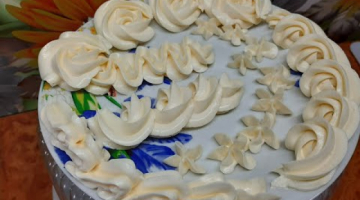
What the Finished Buttercream Should Look Like
Quick “Spoon Test”
Dip a spoon in and lift it out. The buttercream should form a soft peak that holds its shape for about 20 seconds before relaxing slightly.
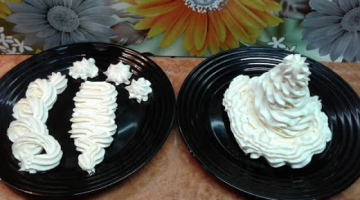
Piping Test
Pipe a rosette or a star border. You want clean ridges, not fuzzy edges. If it droops instantly, it’s too warm. If it breaks or looks rough, it’s too cold.
Best Ways to Use This Buttercream
Cake Filling
This buttercream holds its shape beautifully and doesn’t soak into cake layers quickly. It’s ideal for sponge cakes, honey cake layers, and classic butter-based cakes.
Smoothing and “Sharp Edges”
It spreads cleanly, firms in the fridge, and can be smoothed again after chilling. If you like crisp edges, this is your friend.
Piping Borders and Rosettes
It pipes with confidence. Use large star tips for dramatic rosettes, or smaller tips for shell borders and ruffles.
Eclairs and Pastries
Yes, you can use it as a filling-especially if you chill it and pipe with a narrow tip. It’s richer than standard pastry cream, so it feels luxurious.
Storage and Food-Safety (Practical, Real-World Guidance)
This frosting contains cooked yolks and a high percentage of fat and sugar. That combination is fairly stable, but you still want to handle it like a responsible adult in a warm kitchen.
How Long It Can Sit Out
-
In a cool room (under 75°F / 24°C): a finished, frosted cake can often sit several hours for serving.
-
If your room is hot (over 78°F / 26°C): keep the cake chilled and bring it out closer to serving time.
Refrigeration
-
Store buttercream or frosted cake in the fridge, covered, for up to 4 days for best quality.
Freezing
-
Freeze buttercream up to 1 month in an airtight container.
-
Thaw overnight in the fridge, then bring to room temperature and rewhip briefly.
How to Fix Common Problems (No Drama)
“I think I scrambled the yolks.”
If you see bits like egg flecks, it likely got too hot too fast.
You can strain it, but flavor and texture may suffer. Next time: lower heat, constant stirring, thermometer if possible.
“My buttercream looks curdled or separated.”
Most of the time this is temperature mismatch.
If it looks curdled and chunky: it’s too cold.
-
Let it sit 10–15 minutes, then whip again.
-
Or warm the outside of the bowl slightly (briefly) and rewhip.
If it looks loose and soupy: it’s too warm.
-
Chill the bowl for 10 minutes, then whip again.
“It tastes too buttery.”
This usually means the butter wasn’t whipped long enough before adding the custard base.
Whip butter until noticeably lighter first, then emulsify.
“It’s too sweet for me.”
This recipe is already less sugary than many American buttercreams, but if you prefer even less sweetness:
-
add a pinch of salt
-
use stronger flavorings (espresso, cocoa, citrus)
-
keep layers balanced with tart fillings (berries, lemon curd, cherry)
Flavor Variations (Same Texture, Different Personality)
All amounts below are for the full double batch.
Chocolate Version
-
Add 3 tablespoons (about 30 g) Dutch-process cocoa powder
Result: a deep, smooth, “grown-up” chocolate buttercream.
Pistachio
-
Add about 1/3 cup (70 g) pistachio paste
Result: nutty, elegant, incredible with raspberries.
Mocha / Coffee
-
Replace part of the water with 2–3 tablespoons strong espresso concentrate
Result: creamy coffee frosting that tastes like a café dessert.
Passion Fruit
-
Replace part of the water with about 1/4 cup (60 g) passion fruit purée
Result: bright tropical tang that cuts the richness beautifully.
Lemon-Curd Swirl
-
Fold in about 1/3 cup (90 g) lemon curd
Result: sunny, sharp, balanced-great for spring cakes.
Pro Tips That Make This Recipe Feel Effortless
Choose Real Butter
Use butter that’s at least 82% butterfat if you can find it. Higher-fat butter is more stable and smoother. Avoid spreads and “butter blends”-they contain extra water and stabilizers that can sabotage texture.
Don’t Rush the Cooking
Low heat is not optional. This is the kind of custard that punishes impatience. Gentle heat gives you a smoother base and a better final mouthfeel.
Whip Butter First, Then Build
If you skip the “fluffy butter” stage, you lose volume and the frosting can taste heavier.
Salt Is a Secret Weapon
Even if you’re not making salted caramel anything-add a tiny pinch. It sharpens vanilla, rounds sweetness, and makes the flavor feel more “bakery” than “homemade.”
A Short Culinary Backstory (Because It’s Fun)
Custard-based creams have been part of European pastry traditions for centuries, long before mixers and modern frosting styles. The general idea-egg yolks gently thickened with sugar and dairy-shows up in many classic desserts. What makes this version feel so modern is the combination of a cooked yolk base with whipped butter: you get the stability of a structured custard and the clean finish of a buttercream, without relying on whipped egg whites or delicate sugar syrups.
It’s the kind of recipe that bridges “old-school pastry” and “today’s cake styling,” which is exactly why it has such staying power in home kitchens.
Final Notes: What You’ll Love After You Make It Once
You’ll notice two things right away:
-
It’s calmer than many frostings. It doesn’t fight you.
-
It looks professional even when you’re not trying that hard.
Make it once for a birthday cake, pipe a few rosettes, smooth the sides, take a step back-and you’ll understand why people quietly keep this kind of recipe in their personal “gold folder.”