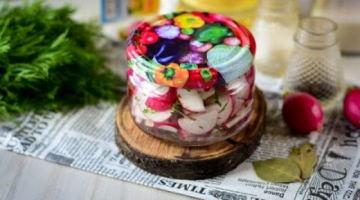
Radish Salad for Winter (Pickled Radish “Summer-in-a-Jar”)
Radishes don’t only belong on spring snack plates and taco bars. They also shine when they’re pickled-still crisp, still bright, but calmer, rounder, and (this is the best part) waiting for you in the dead of winter like a tiny edible time capsule.
My grandpa used to say something like: “In winter, summer smells louder when a crunchy vegetable cracks under your teeth.” He’d set a row of jars on the table-cucumbers, tomatoes, peppers-and right in the middle, these ruby half-moons of radish that looked almost too pretty to eat. Almost.
This is an adapted family-style recipe: simple, budget-friendly, and surprisingly elegant. It works as a side dish, a sandwich “spark,” a bowl topping, and a party plate secret weapon when everything else tastes heavy and beige.
You’ll end up with one pint-ish jar (about 16–17 fl oz), which is basically one generous “portion jar.” Make one to test it. Then make five, because you’ll open the first one too early.
What This Pickled Radish Salad Tastes Like
Think: crisp radish bite + clean dill freshness + a gentle bay-leaf warmth + a light peppery hum. The oil smooths the edges so it’s not a harsh vinegar punch. It’s not sweet pickles. It’s not refrigerator quick-pickles either. It’s somewhere in the middle-bright, balanced, and very snackable.
Texture matters here. If you do it right, the radish stays springy, not limp. You’ll hear it when you chew. That sound is the whole point.
Why Radishes Are Worth Preserving
Radishes can look like background vegetables-cheap, spicy, watery. But they’re part of the same family as cabbage, broccoli, and mustard greens. That’s why they have that clean “peppery” bite and those natural sulfur compounds that make them feel sharp and awake.
Fresh radishes bring vitamin C, folate, potassium, and fiber to the table, but for this recipe the real win is practical: you preserve crunch and color, and you get an instant side dish that cuts through heavy winter food.
Also: pickled radishes are often easier on the stomach than raw ones for some people, because the harshness softens during salting and heat processing. You’re left with radish flavor, but less “attack.”
Ingredients (for 1 jar, about 1 pint / 0.5 liter)
Main ingredients
-
Radishes - 500 g (about 1.1 lb)
-
Water - 500 g (about 2 cups)
-
Neutral vegetable oil (sunflower, canola, grapeseed) - 60 g (about 1/4 cup or 4 Tbsp)
-
Distilled white vinegar (9%) - 1 Tbsp
(If using 5% vinegar, see FAQ for adjustment.) -
Salt (non-iodized) - 40 g
(This is a serious amount. Use pickling salt or non-iodized salt. If you use kosher salt, measure by weight if possible.) -
Sugar - 5 g (about 1 tsp)
-
Fresh dill - 5 g (a small handful, about 2 Tbsp chopped)
-
Bay leaves - 2
-
Black peppercorns - 3–4
Yield
-
1 jar (about 1 pint / 0.5 liter)
-
Serving idea: treat it as one “winter dinner jar.”
Equipment You’ll Need
-
1 clean pint jar (or a 0.5 L jar) with a new lid
-
Large pot for water-bath processing
-
Small saucepan or pot for boiling the brine
-
Towel or canning rack substitute (a folded towel works)
-
Jar lifter or sturdy tongs (optional but helpful)
-
Clean spoon, knife, cutting board
No fancy gadgets. Just clean tools and attention.
Choosing Radishes That Stay Crunchy
If you want crunch in February, you need the right radish in July.
What to look for
-
Size: about 3/4–1 inch wide (2–2.5 cm).
Bigger radishes can get woody. Tiny ones can dry out fast. -
Skin: smooth, tight, glossy.
Avoid soft spots, deep cracks, or dull, tired-looking skin. -
Tail end: fresh and moist, not shriveled.
-
If they come with greens: greens should look alive.
Limp or slimy greens usually mean the radishes are old.
Tip that actually matters: The younger the radish, the better it holds its juice after processing. Young cell walls behave better. That’s your crunch insurance.
Jar Prep (Don’t Skip This)
Clean jars and lids aren’t “extra.” They’re the foundation of safe, stable storage.
-
Wash the jar with hot soapy water (or baking soda), rinse well.
-
Sterilize the jar:
-
Boiling water method: simmer the jar for about 10 minutes, or
-
Oven method: warm at 285°F (140°C) for about 15 minutes.
-
-
Simmer the lid for a few minutes in hot (not aggressively boiling) water.
Small but important detail: Don’t pour hot brine into a freezing-cold jar. That temperature shock is how crunch gets damaged-and sometimes glass, too. Keep the jar warm.
Step-by-Step: Pickled Radish Salad for Winter
Step 1: Wash and slice
Rinse the radishes in cool water. Trim off the tails and any leaf stems.
Slice into thin half-moons, about 1/8 inch thick (3–4 mm).
Try not to go paper-thin. You want slices that bend a little but don’t collapse. Thin enough to absorb flavor, thick enough to stay proud.
Step 2: Build the “aroma base”
In a deep bowl, add:
-
bay leaves (break them if large)
-
peppercorns
-
chopped dill
Add the sliced radishes and toss gently-hands are best here. You’re not bruising them; you’re mixing them like you mean it.
Step 3: Dry salt + sugar (quick cure)
Mix the salt and sugar together. Sprinkle over the radishes like a light snow.
Let it sit for 5 minutes.
This short rest pulls out a little excess moisture and makes the texture tighter. It also helps the flavors move faster later. It’s a small step that makes the jar taste “finished,” not raw.
Step 4: Add oil (the softening veil)
Pour in the vegetable oil and fold gently from the bottom up.
Oil does two things:
-
It rounds out the vinegar sharpness.
-
It helps “seal” the radish surface so the slices stay juicy instead of drying out during processing.
Step 5: Short marinate (yes, it matters)
Cover the bowl and let it sit at room temperature for at least 30 minutes.
During this time, the radishes relax and settle slightly. That means:
-
you can pack more into the jar
-
the flavor tastes more even
-
the radish bite becomes cleaner, less aggressive
Step 6: Pack the jar
Pack the radishes into the warm, sterilized jar.
Pack firmly, but don’t crush them into paste. You want small gaps-little pockets where brine can flow.
If a bay leaf tries to stick to the side like a decoration, let it. It looks good and tastes even better later.
Step 7: Make the hot brine
In a saucepan:
-
Bring 2 cups water to a boil.
-
Turn off the heat.
-
Stir in 1 Tbsp 9% vinegar.
Then immediately pour the hot brine into the jar, covering the radishes, leaving a little headspace at the top (about 1/2 inch is comfortable).
Tap the jar gently to release trapped bubbles. Add a bit more hot brine if needed.
Wipe the rim clean. Put the lid on and screw the band on until snug-firm, not muscle-tight.
Step 8: Water-bath processing (sterilization)
Line the bottom of a large pot with a folded towel. Place the jar on it.
Add warm water to the pot until it reaches about the jar’s “shoulders” (roughly up to the neck area).
Bring the pot to a gentle boil and process for 15 minutes.
Keep the boil steady, not violent. Think: confident simmer-boil, not storm.
Step 9: Cool slowly (the final protection)
Carefully remove the jar. Set it on a towel.
Tighten the lid just a touch if needed (careful, it’s hot), then flip the jar upside down.
Cover with a thick towel or blanket and let it cool slowly overnight.
Slow cooling helps preserve color and texture, and it reduces stress on the glass.
By morning, flip it back, check the seal (the lid should be concave and not flex), label it, and move it to storage.
Flavor Variations (Same Technique, New Personality)
Want to build a “radish jar lineup” like my grandpa did? Here are add-ins that work without ruining the balance.
Add them during the aroma base step:
Mustard seed
-
1/2 tsp
Gives a gentle, lingering heat-like the flavor walks away slowly instead of slamming the door.
Coriander seeds
-
3–4 seeds (or a small pinch, lightly crushed)
Adds warm citrus-nut notes. Makes the jar feel “restaurant-y.”
A ring of chili
-
1 thin slice
Not a firebomb-just a spark. Great if you serve this with noodles or rice bowls later.
Honey instead of sugar
-
1 tsp honey instead of sugar
Adds soft floral sweetness and a faint caramel note.
Important: If you’re using honey, stir it into the warm brine so it dissolves cleanly. Don’t dump it onto the salted radishes-it can cloud the brine.
How to Serve Pickled Radish Salad (Beyond “as a side”)
This is where the jar earns its keep.
With mashed potatoes
Instead of the usual pickle spear, pile a few radish half-moons on the side. That bright crunch wakes up the whole plate.
On toast with cheese
Put creamy cheese on toast-cream cheese, goat cheese, mozzarella, feta-then add radish slices on top. The contrast is addictive: creamy + crisp + tangy.
In a ramen or noodle bowl
Drop in a few slices right before serving. It’s a cross-cultural trick that just works: salty broth + tangy crunch = balance.
In a grain bowl
Try quinoa or rice + spinach + roasted squash + chickpeas, then top with pickled radish. Suddenly your “healthy bowl” tastes like you planned it.
With sandwiches and burgers
Pickled radish cuts through fatty meats and mayo-based sauces. It’s like an instant “brightness button.”
On a holiday table
If your holiday spread is heavy-roasts, potatoes, creamy salads-this jar is the clean, sharp counterpoint that keeps people eating without feeling overwhelmed.
Storage and Safety Notes (Straight Talk)
-
Store sealed jars in a cool, dry place: 40–65°F (4–18°C) is ideal.
-
Keep away from sunlight.
-
Shelf life: up to 12 months if sealed and stored correctly.
-
Once opened: refrigerate and use within 7 days for best texture.
When to throw it out
Don’t debate it. If you see any of the following, discard the contents:
-
bulging lid
-
leaking jar
-
mold
-
strong off smell
-
brine that turns unusually cloudy with bubbling (not just spice sediment)
Food safety is not the place for optimism.
Frequently Asked Questions
Can I swap 9% vinegar for apple cider vinegar?
You can, but match acidity. If you’re using 6% vinegar, increase to about 1 1/2 Tbsp to keep the balance similar.
Apple cider vinegar also adds flavor-slightly fruity and softer. That can be great, but it will change the profile. If you want the classic “clean” pickle taste, distilled white vinegar is the most neutral.
My radishes lost some color after processing. Why?
A few common reasons:
-
Your water is high in minerals (some water dulls reds and purples).
-
The radishes were older and already fading inside.
-
The processing boil was too aggressive.
Fixes:
-
Use filtered water.
-
Keep the boil steady, not violent.
-
Choose younger, brighter radishes.
Can I use iodized salt?
For long storage, don’t. Iodized salt can affect color and sometimes flavor. Use pickling salt, sea salt, or another non-iodized salt.
Can I make this without oil?
You can, but you’ll lose the “rounded” flavor and some of the texture protection oil provides. The jar will taste sharper, more like classic pickles. Still good, just different.
Can I double or triple the recipe?
Yes, easily. Keep the slicing thickness consistent, and don’t rush the short marinate step. When you scale up, the biggest mistake is packing too aggressively and crushing the radishes.
How long until it tastes “ready”?
It’s edible quickly, but the best flavor usually shows up after 7–14 days of resting. That’s when dill, bay, pepper, and radish turn into one clear, unified taste.
Quick Summary (So You Remember the Point)
Pickled radish salad for winter is:
-
Affordable: a little over a pound of radish becomes a full jar of bright flavor.
-
Convenient: open jar → plate is instantly better.
-
Crisp and lively: the texture stays the star if you slice right and process gently.
-
Flexible: change spices and you get a whole new jar personality.
When winter feels long and dinner tastes like “another starch + another protein,” this jar brings back a clean crunch that feels like air and sunlight.
Make one. Hide it in the back. Then, on the day you really need summer to show up-open it.