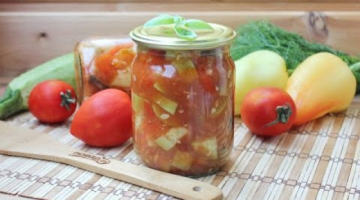
Winter Zucchini Salad (Canned Zucchini & Bell Pepper in Tomato-Garlic Sauce)
When late summer hits in the U.S., zucchini shows up everywhere at once. It’s in backyard gardens, on neighborhood “please take some” tables, at farmers markets stacked like green torpedoes, and in CSA boxes that seem to multiply overnight. Tomatoes are peaking, peppers are glossy, and the kitchen starts to smell like something important is happening.
This is the moment to put a little July in a jar.
Today’s recipe isn’t a plain pickle situation. It’s a thick, spoonable zucchini salad for winter: tender cubes of zucchini and sweet bell pepper simmered in a rich tomato base, balanced with sugar and vinegar, and finished with garlic right at the end so it tastes alive. In the dead of January, you open the lid and it’s not just food-it’s a shortcut back to color, warmth, and that busy, satisfying “I did something useful” feeling.
You can serve it as a side, an appetizer, a topping, or a quick sauce. And if you’ve ever had too much zucchini at once, you already know why this recipe matters.
Why Zucchini Works So Well for Canning-Style Salads
Zucchini is one of those ingredients that’s easy to underestimate-until you learn what it’s good at.
-
Mild flavor, big potential. Zucchini is basically a blank canvas. Put it next to tomato, garlic, and sweet pepper, and it gladly becomes whatever the sauce tells it to become.
-
Texture that holds when treated gently. Cut it right and cook it calmly, and you get tender pieces that don’t collapse into mush.
-
Light, not heavy. This salad feels bright even in winter meals that tend to drift toward starch and meat.
-
It’s the classic “too much at once” vegetable. If you grow it, you know. If you buy it, you still know, because the best zucchini deals always come in quantities that feel slightly ridiculous.
Yield and Jar Math
-
Yield: about 3 half-pint jars (8 oz / 250 ml each)
-
Servings: roughly 12–15 small portions (as a side or snack plate addition)
If you want more, double the recipe. Just use a larger pot and keep the simmer gentle.
Ingredients (for about 3 half-pints)
Here’s the original structure, localized for a U.S. kitchen while keeping the same balance.
-
Zucchini: 1 kg (about 2.2 lb)
-
Bell pepper: 400 g (about 14 oz, usually 2 large peppers)
-
Tomato paste: 150 g (about 5.3 oz, roughly ½ cup tomato paste)
-
Sugar: 2 tablespoons
-
Salt (non-iodized): 1 tablespoon
-
Distilled white vinegar (9%): 3 tablespoons
-
If your vinegar is 5%, see the FAQ section for adjustment notes.
-
-
Neutral oil (sunflower, canola, avocado): 3–4 tablespoons
-
Garlic: 3–4 cloves, finely chopped
Quick Ingredient Roles (So You Understand the “Why”)
| Ingredient | Amount | What it does |
|---|---|---|
| Zucchini | 2.2 lb | main body, mild flavor, soft bite |
| Bell pepper | ~14 oz | sweetness, color, texture contrast |
| Tomato paste | ~½ cup | thickness, tang, deep tomato backbone |
| Sugar | 2 Tbsp | rounds acidity, boosts aroma |
| Salt | 1 Tbsp | pulls juices, strengthens flavor, helps preservation style |
| Vinegar | 3 Tbsp | brightens and acidifies the mixture |
| Oil | 3–4 Tbsp | smooths sauce, carries aroma, helps color stay rich |
| Garlic | 3–4 cloves | sharp finish, “point” of flavor |
Important note: use refined/neutral oil. Strong unrefined oils can turn bitter or smell “off” over time.
Equipment You’ll Need
-
Wide heavy-bottom pot (a Dutch oven is great)
-
Cutting board and sharp knife
-
Clean half-pint jars and lids
-
Ladle and a canning funnel (helpful, not mandatory)
-
Towel or cloth for the “blanket method”
-
Optional but nice: silicone spatula (gentle stirring)
Prep: Cut Size Is Everything
This salad is forgiving, but the cutting is the place where people accidentally sabotage texture.
Zucchini
-
Wash and dry.
-
Cut into 1½-inch-by-½-inch-ish cubes (aim for about ½-inch / 1.5 cm pieces).
-
That size is the sweet spot:
-
Too small → melts down.
-
Too big → doesn’t absorb sauce evenly.
-
If the zucchini is large and seedy:
-
Peel if the skin is tough.
-
Scoop out the watery seed core.
Bell Pepper
-
Slice into thin strips.
-
Mixing red + yellow looks like stained glass in the jar and makes winter meals feel less gray.
Garlic
Chop it with a knife. Skip the garlic press here. Pressed garlic can turn harsh, and for a recipe that sits and waits, you want garlic that stays fragrant, not aggressive.
If Your Zucchini Is Extra Watery
Zucchini can vary wildly. If it feels spongy or you know it’s watery:
-
Toss the cubes with ½ teaspoon salt
-
Let sit 15 minutes
-
Drain the released liquid
This keeps the final jar from becoming “tomato soup with zucchini memories.”
Build the Tomato Base (The “Flavor Foundation”)
-
In the bottom of a wide pot, add 1 tablespoon oil.
-
Add:
-
Tomato paste
-
Sugar
-
Salt
-
About ¾ cup (200 ml) water
-
-
Stir until smooth.
You want a sauce that looks like thin sour cream in thickness-loose enough to move, thick enough to cling.
Add Vegetables in the Right Order
Now add:
-
Zucchini cubes
-
Bell pepper strips
-
Drizzle in the remaining oil
Keep the tomato base on the bottom, vegetables on top at first. This simple layering helps prevent scorching and lets vegetables start steaming in their own juices before you stir.
The 30-Minute Gentle Simmer (Where the Magic Happens)
This part isn’t about boiling the life out of vegetables. It’s about slow blending.
-
Set heat to low to medium-low.
You want a gentle simmer, not a rolling boil. -
Cover partially (lid slightly ajar).
-
After about 10 minutes, the mixture will settle and release liquid.
Stir carefully, scraping from the bottom. -
Around 20 minutes, zucchini turns slightly translucent.
That’s your sign the sauce is moving into the zucchini, not just coating it. -
At about 28 minutes, add:
-
Vinegar
-
Chopped garlic
-
-
Simmer 2 more minutes.
Taste at the end (carefully-hot).
-
Want it a touch sweeter? Add a pinch more sugar.
-
Too salty? Add a splash of hot water and simmer 1 minute.
The final texture should be: vegetables tender but still shaped, sauce thick enough to spoon.
Jar Sterilizing and Clean Handling (No Casual Shortcuts)
Even if you’re not doing long-term pantry canning, clean, careful jar work matters.
-
Wash jars with hot soapy water (or baking soda if that’s your habit).
-
Rinse well.
-
Warm them:
-
In hot water, or
-
In an oven on low heat (just enough to keep them hot, not baking)
-
Lids:
-
Follow the instructions that came with your lids. Many modern lids do not require boiling, but they do need to be clean and warmed.
The goal is simple: hot food into hot jars for best sealing behavior.
Hot Fill and Seal (And the Cozy Cooling)
-
Ladle the hot salad into hot jars.
-
Leave about ½ inch headspace.
-
Wipe rims clean (sticky tomato on the rim can ruin a seal).
-
Close lids until fingertip-tight.
Now the classic method:
-
Turn jars upside down.
-
Wrap in a thick towel or blanket.
-
Let cool 8–12 hours undisturbed.
Slow cooling isn’t superstition. It’s controlled heat fade, and it keeps the contents hot long enough to support a strong seal.
Serving Ideas That Actually Make You Use the Jars
This salad is the kind of thing that disappears faster than you expect once you know where it fits.
With roasted or grilled meat
Pork, lamb, chicken thighs-anything that likes a sweet-tangy tomato partner. Spoon it on the side or right on top.
With potatoes
Baked potato, mashed, roasted wedges-this salad becomes sauce and vegetable in one move.
With grains
Rice, quinoa, bulgur. Add a fried egg, and suddenly it’s a real meal.
With beans
Mix into white beans or chickpeas for a fast winter salad that tastes like it took effort.
Quick “cheat sauce” trick
Drain 2–3 tablespoons of the tomato liquid, whisk with:
-
a tiny drizzle of soy sauce
-
a small spoon of honey
Instant glaze for stir-fry vegetables or noodles.
Variations (Play, But Keep the Logic)
If you like experimentation, here are safe flavor directions that keep the recipe’s personality.
| Add-in | Amount | What changes |
|---|---|---|
| Peeled chopped tomatoes | ~2 cups | fresher aroma, lighter color |
| Julienne carrot | ~1 cup | gentle sweetness, more crunch |
| Chili pepper (no seeds) | 1 small | warm heat, longer finish |
| Bay leaf | 1 leaf | deeper spice note (remove after 10 minutes) |
If you add a lot of extra watery vegetables (like tomatoes), keep an eye on thickness. A watery jar is not automatically “bad,” but the eating experience changes.
“Why This Works” (Flavor Science Without the Lecture)
-
Tomato paste brings depth. It’s concentrated tomato flavor with natural savory notes, so even a simple set of ingredients tastes fuller.
-
Oil protects and carries aroma. Tomato and pepper flavors feel rounder when fat is present. It also helps the color stay rich instead of dull.
-
Sugar + salt + vinegar is the classic balance. Sugar rounds sharp edges, salt sharpens overall flavor, vinegar lifts everything and keeps the tomato base tasting bright months later.
-
Garlic at the end keeps it alive. If you cook garlic for too long, it turns flat. Adding it late keeps the aroma present when you open the jar in winter.
Beginner Q&A
1) Can I replace 9% vinegar with 5% white vinegar?
You can, but it’s not a 1:1 swap. Lower acidity vinegar usually requires a higher amount to reach the same effect. If you want to change vinegar strength, do it carefully and keep the flavor balance in mind-too much vinegar can overpower the salad.
If your goal is long pantry storage, use a trusted, tested canning method for acidified vegetables rather than guessing.
2) What if my zucchini is watery and the sauce turns thin?
Pre-salt and drain zucchini (15 minutes) before cooking, as described above. Also simmer with the lid more open to reduce extra liquid.
3) Why shouldn’t I pour fresh oil on top after cooking?
Because it can sit as a surface layer and affect how the jar behaves over time. It also changes the way the salad tastes after storage-sometimes in a not-great way.
4) Do I have to use non-iodized salt?
For best flavor and clarity, yes. Iodized salt can bring a slight aftertaste and sometimes affects appearance in preserved foods.
Storage and Safety Notes (Straight Talk)
-
Store sealed jars in a cool, dark place.
-
Once opened, keep in the fridge and use within 5–7 days (sooner if you’re pulling from the jar with a not-clean spoon-don’t do that).
-
Check lids before eating. If a jar looks suspicious (bulging lid, weird bubbling, off smell), don’t taste it. Toss it.
If you see a white film or anything fuzzy, treat it as a full discard. Trying to “boil it and save it” is the kind of false economy that isn’t worth it.
Three Serving Scenarios (So This Feels Like Real Life)
1) Snow-day family lunch
Hot baked potatoes, sour cream, and a big spoon of zucchini salad straight from the jar. No reheating. It’s bright enough to cut through winter heaviness.
2) Holiday appetizer plate
Serve it alongside cured meats, cheese, pickles, crackers. Or spoon a little on deviled eggs for a retro vibe that somehow works.
3) Workday lunchbox rescue
A container with quinoa or rice, sliced roasted chicken, a few greens, and ⅓ cup of this salad. It makes the whole box taste like you planned it.
A Small Story (Because This Is What Canning Really Is)
Evening. The kitchen smells like tomato simmering with sugar-the kind of smell that makes you stop scrolling and wander toward the stove without thinking. The counters are damp from wiping. There’s that soft clink of jars as you line them up, and steam keeps fogging the window like it’s trying to erase summer on its way out.
You close the lid, flip the jar, and wrap it up like something fragile and valuable.
Because it is.
Winter is long. Life gets loud. But sometimes the simplest kind of future-proofing is a shelf with a few jars that say: you cared about tomorrow.
Final Note
This winter zucchini salad is one of those recipes that feels modest while you’re making it-and then surprises you months later. It’s flexible, bright, and genuinely useful. Make it once, and you’ll understand why people guard their “zucchini for winter” recipes like family stories.
Cook calmly. Keep things clean. Seal it with intention.
And when you open a jar in the cold season, do it with a smile-because you’re about to taste a little saved sunshine.