Korean-Style Herring Heh (Spicy Vinegar-Marinated Herring with Carrots)
If you’ve got a package of frozen herring hiding in the back of the freezer, this is your sign to turn it into something loud, bright, and seriously addictive.
Korean-style heh (you’ll also see “hwe” in Korean contexts for raw fish dishes) is all about the holy triangle of flavor: salty, sour, and spicy-plus that clean hit of garlic and coriander that makes you lean closer to the bowl for “just one more bite.” In this version, herring stays juicy and silky, carrots stay snappy, and the marinade does what it’s supposed to do: wakes everything up.
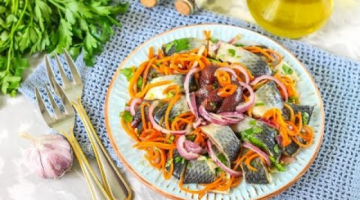
This isn’t a fussy appetizer. It’s the kind of dish that can sit next to mashed potatoes on a family table, but it can also be plated beautifully for a party: glossy fish, ruby onion, sparks of chili, and that warm, toasted spice aroma that makes people ask what you did.
And yes-this is one of those recipes that tastes even better the next day.
Why this herring works so well
There are recipes that take hours and reward patience. Then there are recipes that take minutes of real work and reward restraint.
Heh is the second kind.
Vinegar brightens. Salt pulls moisture to the surface and seasons from within. Chili ties everything together. Herring, which already has a naturally rich, fatty profile, turns that acid-and-heat combination into something almost luxurious-like ceviche’s bolder cousin, only with a more Eastern European–Koryo-saram soul.
This style of “Korean” salad culture became widely known across the former Soviet region through the Koryo-saram diaspora and their adaptations of Korean techniques to local ingredients. That’s why carrots, coriander, garlic, and vinegar show up so naturally in these “Korean-style” home recipes.
Nutritional bonus: herring is not playing around
Herring is a small fatty fish, which is exactly what nutrition folks keep recommending when they talk about omega-3s and brain/heart support. It’s also famously high in vitamin B12, and a solid contributor to vitamin D depending on the variety and preparation.
If you work long hours at a screen, it’s hard to argue with a snack that hits cravings and brings real nutritional value.
Ingredients (US-friendly)
For the fish
-
1 whole frozen herring, thawed (or about 12–16 oz total; yields roughly 2 fillets)
-
1 teaspoon kosher salt (or fine salt-just go slightly lighter)
-
2 tablespoons distilled white vinegar (6%)
(If you only have 5%, it still works-flavor will be a touch softer.)
For the “Korean-style” carrot mix
-
1 medium carrot, shredded or julienned
-
1 small red onion, thinly sliced into half-moons
-
1 fresh chili pepper (red chili or jalapeño), finely chopped
-
4 cloves garlic, pressed or grated
-
1/2 teaspoon ground coriander
-
2 tablespoons neutral oil (sunflower, canola, avocado, grapeseed)
-
Optional: a handful of cilantro (or parsley if you’re cilantro-averse)
Servings
3–4 as an appetizer (or 2 if you’re eating it like a real after-work dinner with potatoes)
What to expect, flavor-wise
-
Sour: bright, clean vinegar snap (not harsh if you give it time)
-
Spicy: adjustable; chili can be gentle or dramatic
-
Savory: herring’s natural richness makes it feel “complete”
-
Aromatic: coriander + garlic + warm oil = that “why does this smell so good?” moment
Ingredient shopping notes (quick but useful)
Herring
In the US, frozen whole herring can show up in:
-
Eastern European markets
-
Some Asian markets with a strong seafood freezer section
-
Coastal grocery stores with a larger frozen fish selection
Look for fish that’s:
-
evenly frozen (no giant ice crystals inside the package)
-
not yellowed (yellow patches can signal oxidation/freezer age)
-
clean-smelling once thawed (ocean-fresh, not “old fish”)
If you can’t find herring, mackerel is the closest swap-still fatty, still bold, still perfect for this style.
Carrot + onion
This dish lives and dies by texture:
-
carrots should be crisp
-
onions should be thin enough to soften quickly, but not disappear
Coriander
Ground coriander should smell citrusy and warm, not dusty. If yours smells like nothing, it’s not “subtle,” it’s just old.
Food safety reality check (important)
This recipe uses a vinegar-based marinade. That’s traditional for many marinated fish salads, but it’s not a magic forcefield.
If you want to be extra careful about parasites when fish is served raw or only “marinated,” food safety guidance used in food service commonly relies on freezing time/temperature rules to destroy parasites (for fish intended to be eaten raw). Examples of widely used standards include freezing at -4°F (-20°C) for 7 days or very cold flash-freezing options like -31°F (-35°C) for 15 hours.
At home, the practical takeaway is simple:
-
Use commercially frozen fish from a reputable source when possible.
-
Keep everything cold and clean.
-
Don’t stretch storage time.
Also, you may see people talk about “safe zones” like pH 4.6 (a threshold often used in food safety because C. botulinum can’t grow below it). That’s real in the context of acidified foods and preservation science, but it doesn’t mean you can ignore refrigeration.
Step 1: Thaw the herring the smart way
The best method:
-
Move the herring to the fridge and thaw overnight in a bowl (to catch drips).
The “I forgot” method:
-
Put the sealed fish in cold water for 30–45 minutes, changing the water once.
You want the fish to be:
-
soft enough to work with
-
not warm
-
not mushy
Step 2: Clean and fillet (faster than it sounds)
-
Cut off the head and tail.
-
Slice along the backbone from the top and open the fish like a book.
-
Lift out the backbone.
-
Remove the innards and scrape away the dark membrane inside the belly (it can taste bitter).
-
Rinse quickly and pat dry.
Then cut the fillets into bite-size pieces-think “fork-friendly,” not tiny.
Step 3: Salt + vinegar marinade (this is the backbone of the dish)
In a bowl:
-
Add the herring pieces.
-
Sprinkle with 1 teaspoon salt.
-
Pour over 2 tablespoons 6% vinegar.
-
Mix gently with your hands so every piece gets coated.
Cover and refrigerate:
-
Best: overnight
-
Minimum: 2–3 hours (still good, just less “fully fused”)
Step 4: The carrot technique (why it’s only about a minute)
This is a very specific move: you’re not “cooking carrots.” You’re blooming spices and garlic in warm oil and letting the carrot catch that flavor without going soft.
-
Heat a skillet over medium heat.
-
Add 2 tablespoons oil.
-
Add shredded carrot and stir for 30 seconds.
-
Add garlic + ground coriander. Stir 30 more seconds.
-
Turn off heat immediately.
Now let it cool to room temperature.
If you dump hot carrot oil onto fish, you’ll change the texture-herring can turn from silky to oddly firm. Cooling protects that “juicy” finish.
Step 5: Final assembly (where the personality shows up)
To the bowl with marinated herring, add:
-
cooled carrot mixture
-
thin red onion slices
-
chopped chili (remove seeds for less heat)
-
optional herbs (cilantro or parsley)
Mix gently from the bottom up, trying not to shred the fish.
Then let it sit:
-
60 minutes at cool room temperature (or in the fridge if your kitchen is warm)
This rest time matters:
-
onion softens slightly
-
vinegar sharpness rounds out
-
flavors stop tasting like “separate ingredients” and become one thing
How to serve it so people remember it
Classic American comfort crossover
Serve it next to:
-
creamy mashed potatoes
-
a simple green salad
-
rye bread or sourdough
The contrast is perfect: hot potatoes, cold spicy fish.
Party platter upgrade
-
Put heh in a shallow white bowl.
-
Garnish with thin chili rings and herbs.
-
Add lemon wedges (optional, mostly for aroma).
-
Serve with toothpicks or small forks.
“Unexpected but dangerous” crostini
-
Toast small bread slices.
-
Spread with cream cheese or labneh.
-
Top with a small pile of heh.
-
Finish with herbs.
It sounds fancy. It eats like a snack you can’t stop.
Picnic wrap
Wrap in a thin flatbread with:
-
cucumber sticks
-
extra herbs
-
a pinch of salt
No utensils, no drama.
Heat control: make it yours
You can easily tune spice:
-
Mild: use jalapeño, remove all seeds, use half the pepper
-
Medium: use full pepper, remove some seeds
-
Hot: keep seeds, add chili flakes, or use a hotter chili
You can also tame onion bite by soaking the sliced onion in cold water for 10 minutes, then draining and adding.
Storage and shelf life
-
Store in a glass container with a tight lid.
-
Keep refrigerated.
-
Best within 48 hours, okay up to 72 hours if everything stayed cold and clean.
After that, texture drops:
-
onion gets limp
-
herbs wilt
-
fish flavor dulls and can start tasting “tired”
Variations (same idea, new personality)
1) “Gentler acid” version
Swap half the vinegar for lime juice.
Result: brighter, fresher, slightly more modern.
2) Sesame twist
Add:
-
1 teaspoon toasted sesame oil
-
1 tablespoon sesame seeds
Result: nuttier aroma, more depth.
3) Winter citrus note
Warm a small strip of orange or mandarin zest in the oil for 20 seconds before adding carrots.
Result: subtle holiday vibe without making it “sweet.”
4) Baltic-style soft heat
Use:
-
pink peppercorns (crushed) instead of chili
Result: floral warmth, less burn.
FAQ
Can I make this with salted herring instead of frozen?
Yes, but it’s a different game.
If you’re using already salted/pickled herring:
-
skip the added salt
-
shorten the vinegar marination to about 1 hour
-
taste before mixing everything, because it can go overboard fast
Why does herring sometimes taste bitter?
Common causes:
-
dark belly membrane wasn’t removed
-
the fish is old/oxidized
-
fat under the skin can taste strong
Fix:
-
scrape the membrane clean
-
if needed, remove skin
-
add a tiny pinch of sugar to the carrot mix (not enough to taste sweet-just to round edges)
My dish tastes too sharp-what now?
Give it time. Vinegar calms down after a rest.
If it’s still too sharp:
-
add 1 more tablespoon oil
-
add more onion/carrot
-
serve with potatoes or bread (they absorb harshness instantly)
Can I prep it for a holiday table?
Absolutely. It’s practically built for that.
Best plan:
-
marinate fish the night before
-
do carrot step and final mix the next day
-
let it sit 1–2 hours before serving
A quick cultural note (without turning this into a lecture)
“Korean-style” salads across Eastern Europe and the post-Soviet space often trace back to Koryo-saram food traditions-Korean diaspora communities adapting methods and flavors to what was available locally. That’s why you see carrots, coriander, vinegar, garlic, and chili show up again and again in these home recipes.
This herring heh is part of that living, practical cuisine: bold flavor, smart technique, and no wasted effort.
Final word
This is one of those recipes that feels like a secret weapon:
-
quick active work
-
huge payoff
-
unforgettable flavor
-
flexible enough to match your table, your mood, and your heat tolerance
Make it once, and frozen herring stops being “that thing I should use someday” and becomes “the thing I keep on purpose.”