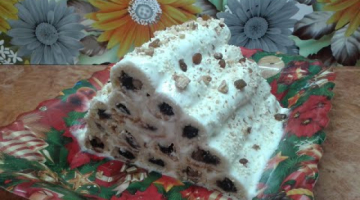
Monastery Hut Cake (Monastyrskaya Izba) With Sweet Cherries, Raisins, and Walnuts
A tender sour-cream “log cabin” cake that melts in your mouth - with a twist that tastes like summer.
There are desserts that feel like a time machine. You open the fridge, spot a funny little “hut” built from golden pastry logs, and suddenly you’re back in a warm kitchen where tea is brewing and someone is saying, “Just wait - it needs a night to soak.”
The classic Monastery Hut Cake (often known by the Russian/Ukrainian name “Monastyrskaya Izba”) is traditionally made with tart cherries. That’s the version most people remember: sweet dough, tangy sour-cream frosting, and that bright cherry pop that keeps each bite from feeling heavy.
But here’s the honest truth: sweet cherries (черешня) change the whole character of the cake. They’re softer, sweeter, more “round” in flavor. Pair them with sour cream, add a little raisin sweetness for depth, and throw in walnuts for crunch and a touch of pleasant bitterness - and you get a cake that tastes familiar, yet noticeably richer and more modern.
And yes: it’s still simple. No fancy equipment, no pastry diploma. Just a bowl, a rolling pin, a baking sheet, and a little patience.
Why This Sweet Cherry Version Works So Well
Sweet cherries instead of sour cherries
Sweet cherries bring a gentle berry-caramel vibe. With sour cream, that sweetness turns creamy and elegant rather than sharp.
Raisins for “back-note” sweetness
Raisins don’t scream; they hum. They make the cherry taste deeper and the whole bite feel more complete, especially after the cake has rested overnight.
Walnuts for crunch and contrast
This cake can be very tender and creamy, so walnuts save it from being one-note. They add structure to the bite - and they make the flavor feel grown-up.
Quick Recipe Snapshot
Prep and timing
-
Hands-on prep: about 35–45 minutes
-
Chill time for dough: 40 minutes (or a quick shortcut option below)
-
Bake time: about 15 minutes per tray of pastry logs
-
Assembly time: 20–25 minutes
-
Resting/soak time: 6–8 hours (overnight is best)
-
Servings: 8–10 slices
Texture goal
Soft pastry logs that hold their shape, then turn tender after soaking in thick sour-cream frosting.
Ingredients
(US-friendly wording with practical notes)
For the dough (makes about 12–14 logs)
-
1 cup (225–250 g) unsalted butter, melted (warm liquid, not boiling hot)
-
1 cup (240–250 g) sour cream, full-fat preferred
-
3/4 cup (150 g) granulated sugar
-
1 packet vanilla sugar (8–10 g) or 2 teaspoons vanilla extract
-
1/2 teaspoon baking soda (or 1 teaspoon baking powder)
-
4 to 5 cups all-purpose flour, added gradually (you may not need it all)
For the filling
-
Sweet cherries, pitted: about 3 cups (350–400 g)
-
Optional: tart cherries, pitted: about 2 cups (200–250 g) for contrast
-
Raisins (dark or golden): 1/2 cup (70–90 g)
-
Walnuts: 3/4 cup (70–90 g), halves or large pieces
Important note: Fresh, frozen (thawed), or jarred cherries all work. The only rule is: drain and dry them well so the logs don’t leak and split.
For the sour cream frosting
-
3 cups (600–700 g) sour cream, ideally full-fat (20–25% style if you can find it)
-
2 1/2 cups (250–300 g) powdered sugar, to taste
The Heart of the Cake: A Simple Idea Done Right
This dessert is basically three steps repeated with care:
-
Make a soft dough
-
Wrap cherries in thin pastry logs
-
Stack logs into a little “hut,” frost generously, and let time do the magic
If you’ve never built a cake like this before, don’t worry. It’s not fragile. Even if a couple logs crack, the frosting turns into edible “cement” overnight and everything becomes beautiful.
Step 1: Make the Dough
1) Melt the butter gently
Melt butter until just liquid. Don’t let it boil or brown. A burned-butter note will fight the delicate sour cream flavor.
2) Mix the wet base
In a large bowl, combine:
-
melted butter
-
sour cream
-
sugar
-
vanilla
Add baking soda and mix until smooth and pale. The batter should look creamy and slightly airy.
3) Add flour gradually
Add flour in small portions (about 1/2 cup at a time). Start mixing with a whisk or spatula, then switch to hands when it thickens.
You want a dough that is:
-
soft
-
smooth
-
not sticky on your hands
-
not “cement-like”
Don’t chase a perfect number of cups. Flour varies. Humidity varies. Your goal is texture.
4) Chill the dough
Form it into a ball, put it in a bag or wrap, and chill for at least 40 minutes.
Quick shortcut: If you’re in a rush, 15 minutes in the freezer can work - but don’t let it hard-freeze. You want it firm, not rock-solid.
Step 2: Prep Your Filling Like a Pro
This is where many “log cakes” fail: wet fruit.
Cherries: drain and dry
-
If fresh: pit them, then pat dry.
-
If frozen: thaw completely, drain, pat dry.
-
If jarred: drain very well, pat dry until not glossy-wet.
Raisins: soften (optional but worth it)
Pour warm water over raisins for 5 minutes, then drain and dry. This keeps them plump and prevents them from stealing moisture from the frosting.
Walnuts: toast for flavor
Toast walnuts in a dry skillet for 3–4 minutes, shaking often. Let cool.
This tiny step makes the cake taste like you worked much harder than you did.
Step 3: Make Even Pastry Logs (The “Hut Beams”)
A simple template trick
Cut a cardboard template: 7 inches × 1.5 inches (about 18 × 4 cm).
This keeps logs the same size, which makes stacking clean and stable.
1) Divide dough
Cut the chilled dough in half. Work with one piece while the other stays cool.
2) Roll thin
Roll dough to about 1/8 inch (2–3 mm). If it fights you, let it sit for 2–3 minutes to soften slightly.
3) Cut strips
Use your template and a pizza cutter or knife to cut strips. Re-roll scraps until you get 12–14 strips.
Step 4: Fill and Seal the Logs
Think of three flavor “modes” you can mix in the same cake:
Flavor combinations that shine
-
Sweet cherry + walnut: soft fruit, crunchy bite
-
Sweet cherry + raisin: extra sweet, almost caramel-like
-
Tart cherry alone (optional): classic contrast
How to fill without leaks
Place cherries in a line down the center. Add a raisin or walnut piece here and there (don’t overload).
Fold the dough over the filling and pinch the seam gently. Leave the ends open - that’s normal. It lets steam escape and prevents blowouts.
Place seam-side down on a parchment-lined baking sheet.
Step 5: Bake
-
Oven: 350°F (180°C)
-
Time: about 15 minutes, until lightly golden
If your oven has hot spots, rotate the tray around minute 10.
Let logs cool completely on a rack.
Hot logs are fragile. Cooled logs are builders’ beams.
Step 6: Make the Sour Cream Frosting
This frosting is the soul of the cake. It should be thick enough to cling, but soft enough to soak the pastry overnight.
1) Chill your tools
Cold bowl, cold whisk, cold sour cream. This helps it whip better.
2) Whip gently, then sweeten
Whip sour cream on medium speed for about 2 minutes. Add powdered sugar in portions.
Whip 8–10 minutes, until thicker and able to hold soft peaks.
Then refrigerate until assembly.
If your sour cream is very loose:
Sour cream brands vary in thickness. If yours is runny, you can:
-
chill it longer, and/or
-
add 1 teaspoon cornstarch per 1/2 cup frosting, then rest 20–30 minutes in the fridge
(You’re not making it “glue.” You’re just helping it behave.)
Step 7: Assemble the “Monastery Hut”
This is the satisfying part. The cake becomes architecture.
The classic stacking pattern
-
Row 1: 5 logs
-
Row 2: 4 logs
-
Row 3: 3 logs
-
Row 4: 2 logs
-
Row 5: 1 log (the roof peak)
How to assemble cleanly
-
Spread a thin layer of frosting on your serving plate (it prevents sliding).
-
Lay down 5 logs in a tight row.
-
Frost generously - but don’t create pools.
-
Add 4 logs on top, nestling them into the grooves between the logs below.
-
Frost again.
-
Continue: 3 logs, frost; 2 logs, frost; 1 log, frost.
Finally, coat the sides and top with a smooth layer.
Optional toppings (choose one, don’t overdo)
-
chopped toasted walnuts
-
a small handful of raisins
-
coconut flakes
-
white chocolate shavings
The cake already has a lot going on. A light finish looks best and tastes best.
Step 8: The Most Important Step - Rest Overnight
This cake is good right away.
But after 6–8 hours, it becomes what people remember forever.
Overnight, the pastry logs soften as they absorb sour cream frosting, and the cherries gently perfume the whole interior. The texture shifts from “cookie-like” to tender cake - not mushy, just perfectly sliceable and melt-in-your-mouth.
How to Slice Neatly (No Collapse, No Mess)
-
Trim the uneven ends for clean geometry (optional but very satisfying).
-
Use a thin sharp knife.
-
Dip it in hot water, wipe dry, then slice. Repeat as needed.
Warm blade + dry wipe = clean cuts without dragging frosting everywhere.
Key Tips That Turn a Good Cake Into a Great One
Use full-fat sour cream when possible
Higher fat = thicker, more stable frosting and a silkier mouthfeel. Low-fat versions can taste sharper and may weep more.
Don’t over-flour the dough
Too much flour makes logs dry and prone to cracking. A slightly softer dough is better than a stiff one.
Toast walnuts
Three minutes in a pan can make the difference between “just sweet” and “wow, what is that flavor?”
Dry your cherries
If your logs leak, it’s almost always excess moisture. Dry fruit is the quiet secret.
Baking soda doesn’t need vinegar here
The sour cream provides enough acidity to react with baking soda, so you don’t need to “extinguish” it with vinegar.
A Little Story Behind the Cake (And Why It Became a Classic)
“Monastery Hut” is a folk name, and like many folk desserts, it carries more legend than paperwork. One story says the cake was invented in a women’s monastery where cherries were abundant and spoiled quickly. Wrapping fruit in thin dough, baking it fast, and layering it with sour cream was a practical way to preserve flavor and feed many people with simple ingredients.
Whether that legend is literal truth or a sweet invention doesn’t matter much - because the cake itself makes sense historically. It uses pantry staples, stretches a modest amount of butter and sour cream into a celebration dessert, and relies on time rather than fancy technique.
And that’s exactly why it survived and traveled. Different regions swapped the fruit: sour cherries, sweet cherries, cranberries, dried apricots, even berries from preserves. The structure stayed the same because the structure is brilliant.
FAQ: Common Questions and Straight Answers
Can I use margarine instead of butter?
You can, but the flavor and texture will suffer. If budget matters, a compromise is half butter, half neutral baking spread. The butter is what gives the dough that tender, shortbread-like bite.
My logs cracked. Did I ruin it?
No. Cracks usually mean too much flour or slightly overbaked logs. Once you frost and rest the cake, cracks become invisible and the texture softens anyway.
Can I make it in advance?
Yes - and you should. This cake is at its best the next day.
You can bake the logs one day, store them airtight, then assemble the next day and let it rest overnight.
What if I can’t find very thick sour cream?
Some sour cream in the US is thinner. Chill it well, whip longer, and use powdered sugar (it helps thicken). If needed, use the cornstarch trick mentioned earlier.
Variations (If You Want to Play With It)
Chocolate logs
Add 2 tablespoons cocoa powder + 1 extra tablespoon sugar to the dough.
Result: a cocoa “cookie” vibe with bright cherries and creamy frosting.
Citrus lift
Add orange zest to the frosting.
Result: fresher aroma, slightly lighter finish.
Cream cheese frosting (more stable in warm rooms)
Replace some sour cream with cream cheese for a firmer cake.
Result: thicker structure, less traditional tang, more cheesecake-like.
Rum-soaked raisins (adult version)
Soak raisins briefly in warm water, then toss with a teaspoon of rum extract or a tiny splash of rum (optional).
Result: deeper aroma, especially good with chocolate logs.
Lighter Options (Without Ruining the Dessert)
If you’re trying to keep it more balanced:
-
Reduce sugar in the dough to 1/2 cup instead of 3/4 cup.
-
Use less powdered sugar in frosting and rely on fruit sweetness.
-
Add more cherries and slightly fewer logs for a fruit-forward slice.
But keep your expectations realistic: this is a celebration cake. The smarter strategy is usually smaller slices and enjoying it slowly.
Final Notes: Why This Cake Wins Every Time
This sweet cherry, raisin, walnut version has four things going for it:
-
It’s simple and repeatable - no delicate layers, no piping stress.
-
It’s make-ahead friendly - it practically demands overnight rest.
-
It tastes nostalgic but fresher - sweet cherries soften the classic sharpness.
-
It looks impressive - people think you did something complicated.
If you want one dessert that feels homemade, generous, and a little magical when you slice into it - this is it.
Quick Checklist Before You Start
-
Butter melted (not boiled)
-
Dough chilled at least 40 minutes
-
Cherries drained and dried
-
Walnuts toasted and cooled
-
Frosting whipped thick and chilled
-
Cake rested overnight for the best texture
If those boxes are checked, you’re set. Roll, fill, bake, stack, frost - and let the fridge do the final transformation.